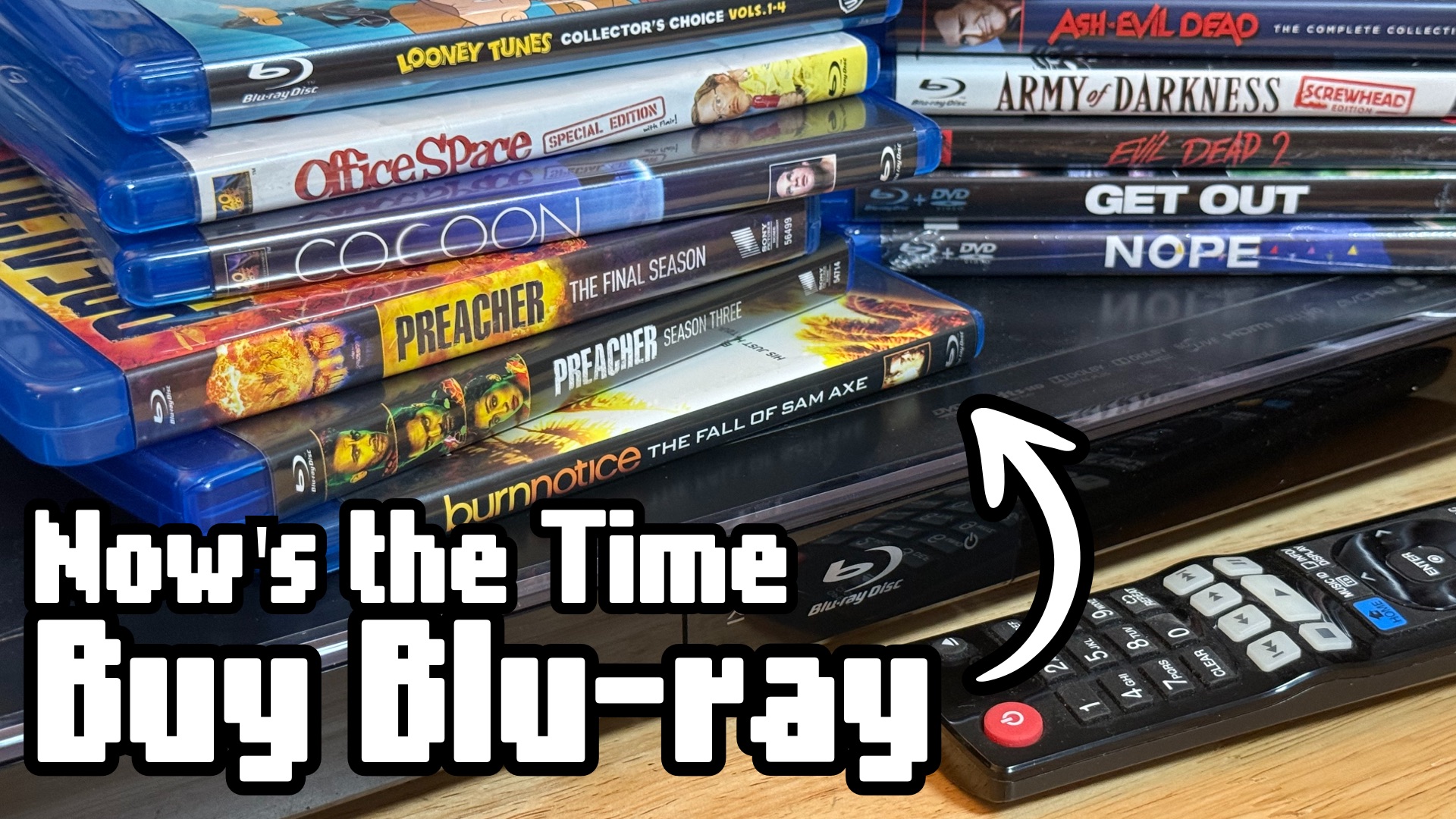

Blu-ray turned twenty last month. They first hit shelves on June 20, 2006. About a week after the birthday celebration, Sony announced it would stop producing physical discs for new PlayStation games starting in January 2028.
It seems inevitable: discs are done, streaming won. Are TV and movies next?
The State of Physical Media
Don’t start writing obituaries for physical media yet! Right now is the best moment to start buying and collecting Blu-rays. Prices are low, supply is plentiful, and Blu-ray players are easily found at thrift stores. But this window is closing, and it’s time to take advantage of deals before it does.
The numbers aren’t quite what the obituaries suggest. 4K Blu-ray sales in the US rose 12% in 2025 compared to 2024. Sales volume is still declining, but the story gets more interesting when you look at units sold. When you put video discs next to vinyl and CD you can see a pattern.
Video vs Vinyl vs CD — Physical Units Sold in the USA
| Year | DVD/Blu-ray Sold (Estimated) | Vinyl Sold (RIAA Official) | CDs Sold (RIAA Official) |
|---|---|---|---|
| 2015 | 408.0 | 16.9 | 122.9 |
| 2016 | 365.3 | 17.2 | 99.4 |
| 2017 | 314.6 | 16.0 | 87.7 |
| 2018 | 267.3 | 16.7 | 52.0 |
| 2019 | 219.3 | 18.8 | 46.5 |
| 2020 | 163.3 | 22.9 | 31.6 |
| 2021 | 131.3 | 39.7 | 46.6 |
| 2022 | 105.3 | 41.3 | 33.4 |
| 2023 | 83.3 | 43.2 | 30.7 |
| 2024 | 64.0 | 44.3 | 33.0 |
| 2025 | 58.0 | 46.8 | 29.5 |
Physical media is leveling out and consolidating around enthusiasts. People who want to own their media.
Meanwhile, big retailers have bailed. Best Buy stopped carrying discs entirely. Target has next to nothing. Walmart, Amazon, and Barnes & Noble are what’s left at the mass-market level.
Blu-rays are ripe for the picking. Stores are dumping stock. All those discs people bought over the past two decades are getting cleared out. Collections are being donated. Estates are being liquidated. The secondhand market is flush.
Why Blu-ray Is Worth Owning
The picture and sound are better. This is the part people find hard to believe, so here’s the specifics.
Streaming services deliver 4K at roughly 15–25 Megabits per second (Mbps). A Blu-ray disc runs higher at 25–35 Mbps, and a 4K UHD disc can hit over 100 Mbps. This bitrate is what determines how much compression gets applied, and the compression streaming uses is what turns a carefully graded dark scene into a muddy mess of blocky artifacts.
A standard 1080p Blu-ray will often look better than a 4K stream of the same film. Better in ways you notice during any scene with fast motion, film grain, or shadow detail. The audio difference is even more noticeable. Streaming will severely compress audio. Discs have lossless audio, which matters if you have a decent surround sound system or you just want to hear dialogue clearly.
Discs have bonus material. Commentary tracks, making-of documentaries, deleted scenes, behind-the-scenes features have mostly been stripped away from streaming versions. Most people don’t notice until they go looking for a commentary track they remember and find nothing but the movie. For anyone who likes films as craft rather than just content, this is a loss.
You own it. In January 2026 alone, over 150 movies and TV shows disappeared from Netflix as licensing deals expired. That’s just one month on one service. A disc on your shelf doesn’t vanish because two companies couldn’t agree on terms. Nobody can pull it, re-edit it, or replace the original cut with a revised version. (Looking at you, George Lucas and James Cameron!)
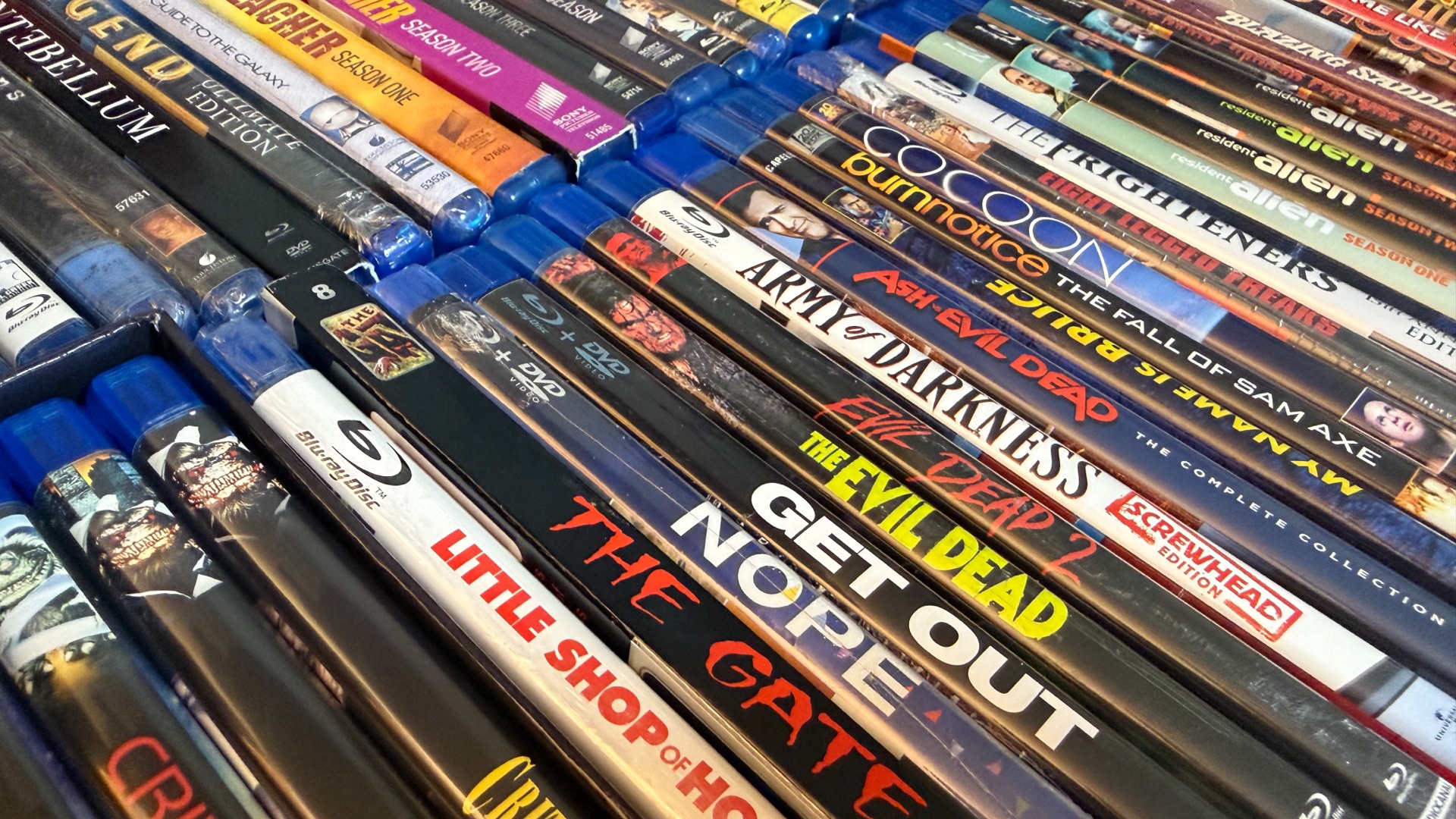
Even new physical releases aren’t immune. Some 4k Blu-ray “definitive” versions of films are altered or censored by removing lines of dialogue or scenes that may be found offensive by today’s standards. This includes Pleasantville, The French Connection, Crocodile Dundee, and Riddick. Your original Blu-rays will always remain untouched.
It works offline. No login. No buffering. No apps. No subscription. Put the disc in and it plays. It will still play in twenty years.
What about DVDs and 4K?
DVDs are worth grabbing when there’s no Blu-ray release of a film, or when the Blu-ray is priced higher than you want to spend. They’re often better than you’d expect, too. A modern Blu-ray player will de-interlace a DVD better than a lot of the combing artifact-riddled standard-def streaming masters out there. (Looking at you, Deep Space Nine and Voyager.)
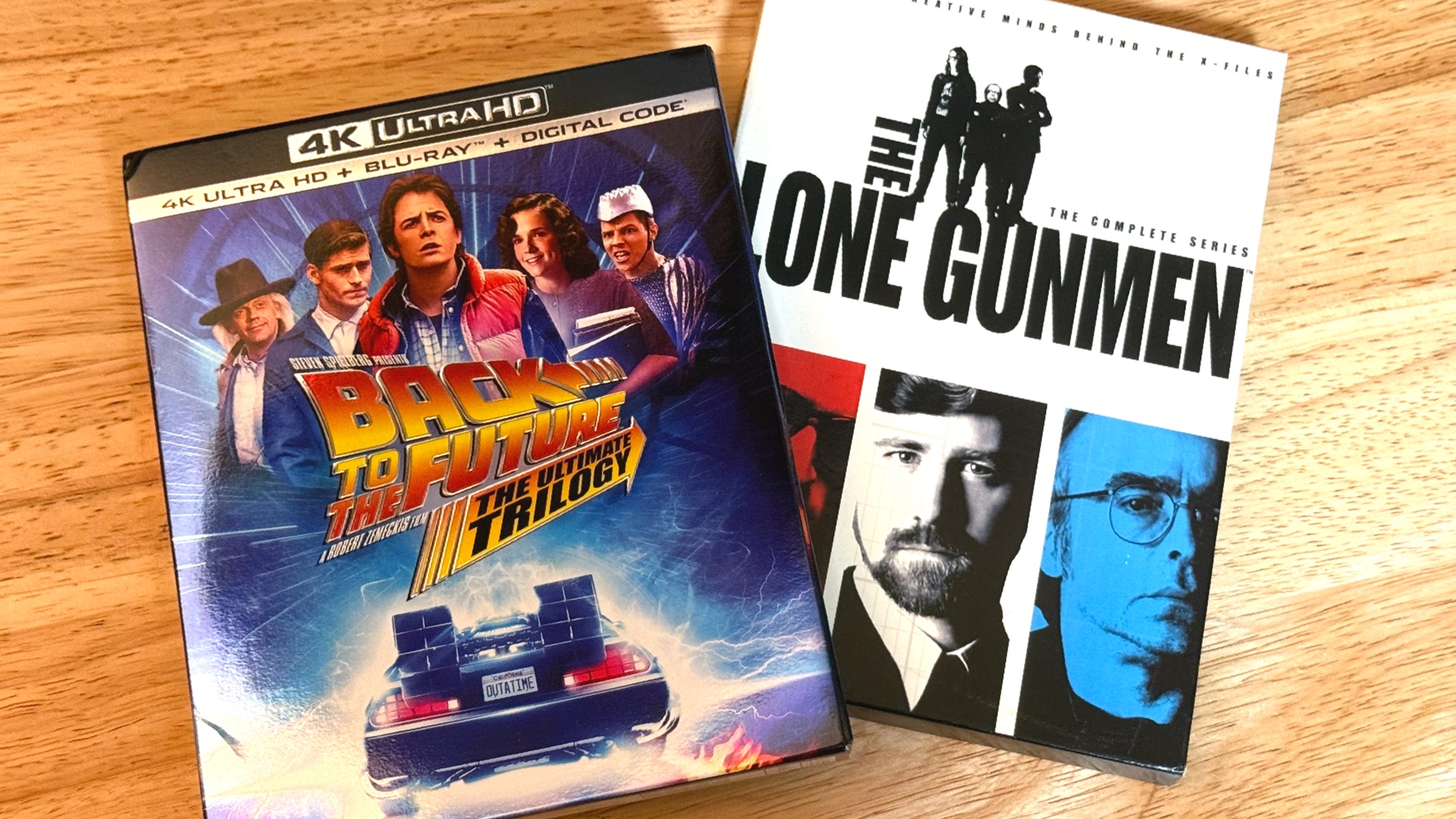
4K UHD is the best home format available, but it’s also the most expensive one. A dedicated 4K player also costs hundreds of dollars, and the discs themselves cost multiples of what a used Blu-ray does. I buy 4K for films I love enough to justify it. For building an actual collection, Blu-ray is the most bang for your buck. (If you don’t have a 4K TV, this whole question is moot!)
Why Now, and Why the Deals Won’t Last
The prices are the obvious part. Used Blu-rays at thrift stores cost around five dollars or less. Bargain bins and clearance racks are full of catalog titles nobody’s fighting over.
Here’s what I think most people are overlooking: this stock is finite.
These discs aren’t getting restocked. When the cheap copies of a mid-tier catalog title sell out, that’s it. Studios aren’t going to run Blu-ray reprints. They will throw them up on streaming. (Only if they can work out licensing deals with the IP owners or music tracks. Older content from a different era may be deemed questionable and just dropped entirely.)
The titles popular enough to turn a profit will get premium 4K remasters at premium prices. Everything else just stops being available.
We’ve watched the same arc with vinyl. There was a stretch in the 2000s when used records were everywhere for a dollar. Then vinyl became a boutique enthusiast format and a new pressing started running $30–40. The people who bought during the cheap window and the people discovering the format now are in completely different positions.
Blu-ray is somewhere in the middle of that arc right now. The gap between “plentiful and cheap” and “scarce and expensive” is exactly where we are.
The disc players follow the same curve. Right now you can find a working Blu-ray player at a thrift store for around fifteen bucks. As the remaining audience skews toward enthusiasts, players stop being thrift store filler and start being a specialty purchase.
Getting Started
Where to Buy
Thrift stores: The starting point. Goodwill, Salvation Army, and local shops are where the flood of donated collections lands first, and where prices are lowest. Selection is random, which is either the fun part or the frustrating part depending on your temperament. Make a list of what you want and shop with a mission.
Used media stores: If you have one locally, get to know it. The selection tends to be more curated than a thrift store, prices are still reasonable, and the staff usually knows what they have. Make friends with them and you might get tipped off on new trade-ins before they go on the shelf!
Liquidation Stores or Bin Stores: These are places that sell overstock and Amazon returns. You never know what you’ll find. Sometimes the one near me has a bin full of Blu-rays. I’ve also had a lot of good luck at Big Lots.
Gruv: Worth checking regularly for new discs at prices well below retail. Their sale rotation is aggressive, and it’s one of the better places to shop. I find that they tend to ship discs in better packaging than Amazon.
Barnes & Noble: One of the last large retailers still selling physical media. Their membership runs $40 a year and gets you 10% off everything plus free shipping, which pays for itself quickly if you’re buying with any regularity. They run 50% off sales several times a year on boutique labels and other media.
Walmart: I think Walmart is single-handedly keeping the DVD market alive. Their physical media department is huge and there’s a sprinkling of blu-rays in there.
eBay: Best for finding specific out of print titles rather than hunting around retail. You’ll pay the going rate though. No deals here.
Hardware
Any Blu-ray player with an HDMI output will work with a modern TV or receiver, and essentially everything made after 2014 has one. Plenty of earlier models do too. If you have a PlayStation or Xbox with a disc drive odds are it’ll play Blu-rays!
If you find a player at a thrift store in good shape with no remote, buy it anyway. Aftermarket remotes for common brands are all over Amazon and eBay for around ten dollars.
When buying used discs, check the playing surface for scratches, delamination, or disc rot. DVDs will scratch easily, but Blu-rays are much harder to scratch. Dirty Blu-rays clean up easily.
Also make sure the correct disc is in the case. A lot of times I’ll find a Blu-ray double pack with just the DVD version or the special features inside. More often than not, if there’s a digital code inside, it still works!
You Don’t Have to Pick a Side
None of this is an argument for canceling all streaming and building a home server. I’m certainly not going to waste my life ripping movies and managing a Plex server. (Have you seen the price of hard drives right now?) Streaming is good at what it’s good at. You can discover new things, there’s exclusive content, it’s convenient, and it’s portable. It’s a service and rebuilding it yourself is a time consuming hobby.
There’s also nothing wrong with buying digitally. If the physical version is costly or a TV show is only available on 50 DVDs in one of those awful broad bulk cases, digital seems like a great alternative. Pick a service and only buy there so your digital library can stay together and easily browsed.
The tool I use to make this practical is Cheap Charts. It sends me notifications when movies and TV shows on my wish list go on sale. I’ve picked up entire series of TV shows for less than the cost of a single month of Netflix. When a series I want drops, I buy it and stop worrying about whether it’ll still be on some streaming service next year.
My point: own the things that actually matter to you. Stream casually. Buy digital and physical deliberately. I’m a Libra. I like the balance.
The Window
Sony killing off game discs in 2028 is the headline. The bigger story to me is the one happening at your local thrift store right now, where two decades of somebody’s movie collection is sitting on a shelf for a few bucks a disc.
This is a window, not a permanent condition. The stock is finite, the reprints aren’t coming, and the format is drifting toward boutique pricing the same way vinyl did. Now is the time to pick up Blu-ray.

Start the conversation