
Here Comes the “Slop”
This site wouldn’t exist without the help of an AI coding agent. I have the experience and skills to build it myself. What I lack is the time or energy after my nine-to-five job. Agentic coding tools made a project I kept putting off into a thing I that’s published.
Critics are blaming Agentic coding tools, like Claude Code, for a glut of AI slop websites, cloned games, and sloppy decomps, recomps, and ports. The claim is these “vibe coded” things are filling the internet with disposable “slop” content. That bad products full of technical debt, unmaintainable and insecure code are being created. All this mess gets in the way of finding the good, human-made products and content. Throw algorithmic curation into the mix and the Dead Internet Theory seems real.
The Tools are Good, Actually
If your only experience with AI tools is the free ChatGPT plan, the junk filling up your Instagram feed, or customer service chatbots, I can see why that perception persists. Those things haven’t gotten better or more useful.
The reality with AI-assisted coding tools is very different. I don’t think people understand how far agentic coding has progressed. These tools help me produce products, find problems and fix them quicker than I ever have. I can reliably give a task to Claude Code and it will output better code in minutes than I would have written in days. I didn’t think this was true 12 months ago. That’s how fast things have progressed.
“Vibe coding” is also a loosely defined term. Some argue that any AI generated code is vibe code and others define it as when the developer never looks at the code output. In this article, I define it as the latter, but the naysayers will use the former.
How one uses agentic coding really comes down to what the end result needs. Code for financial institution software should probably be looked at by an experienced developer. Steaks are high! Building a blog or repurposing an old tablet can be done without looking at or touching code.
Regardless, AI-assisted coding is becoming the industry standard. Like the Adobe Creative Suite is to graphic design. Sure, you can work without it, but it’s a lot more effort.
Didn’t We Already Do This?
Go back to the early 2000s internet. When the content management system (CMS) began to emerge. At that time it took a programmer or a web developer to spin up a website. A CMS required hosting, a database and programming skills. HTML, CSS, JavaScript, and PHP were beginner-friendly languages, but it was a hurdle most couldn’t jump. Then WordPress became the dominant CMS tool and made web publishing much easier. Now it powers about 40% of websites.
What’s great is anyone can spin up a WordPress site. It’s free and open-source. Anyone can create themes and plugins to share. WordPress lowered the technical barrier to publishing so people could focus on the content side. It was a magical time. Everyone could publish about anything online. The internet was awash with blogs. Some good. A whole lot of them were terrible. You could describe it as slop.
Since the development barrier was also low, that meant anyone of any skill could produce a theme or a plugin that someone else could install and use in their site. Much of this was poorly written, insecure, and unoptimized code. WordPress was blamed for the spread of so much malware that it spawned a whole industry of services that would fix hacked WordPress sites. Today, 96% of WordPress vulnerabilities were found in plugins.
Most developers don’t look at the WordPress source code or even understand exactly how it works. They just use it. They use code libraries and frameworks for everything.
There’s a reason React and Tailwind CSS are so popular. They solve problems and save a ton of time and take care of the tedious stuff. Game Developers use game engines, like Unity, Unreal Engine, and Godot to speed up development. Not many developers make stuff from scratch anymore and even fewer will look under the hood of the tools they use.
All this creates what can be called “vibe coded slop.” Lowering the bar to entry allows more low quality content and low quality sites to pop up everywhere.
I’d argue that’s a good thing. Out of all that mess WordPress allowed people to find their voice online and build communities. With RSS feeds, it became a social platform and allowed more people to create and share things.
Remember when Google Reader was our social media feed? Good times.
Social Media Became the Internet
Eventually, people started abandoning blogs for social media, leaving the open Web for walled gardens. Social media was fun and easy. No technical skill required. Anyone could keep up with friends, family, and local events. Your feed was all the posts and events your friends were making.
Over time, social media evolved into an algorithmic nightmare that optimized feeds for maximum user engagement and screen time locking people into an endless scroll. Your friends and the people you followed didn’t show up as much anymore.
This essentially became the new internet. An internet controlled by a handful of big tech companies happy to fill our feeds full of sponsored or algorithmic content. It’s constantly tracking and gathering data on you so it can learn how to hold your attention longer and influence you. This has led to some terrible outcomes for people and for entire countries.
AI slop is going to ruin the internet? Instagram and TikTok don’t have to pay for content. They have an army of teenagers making content for free. We are already awash in slop content.
The Personal Web is Back
An established hosting platform, like WordPress.com or Wix, is still the easiest way to get started. You get most features out of the box, but what it gives in convenience it takes away in control. You are bound to their user agreements, you have to use pre-built templates, and custom features are not really an option.
With agentic coding tools, people can build their own personal corner of the open web again. With static site generators like Jekyll and Hugo, the risk of being hacked is greatly reduced because you aren’t using a database. It’s just static HTML pages. Like WordPress, there are plenty of themes to get you started.
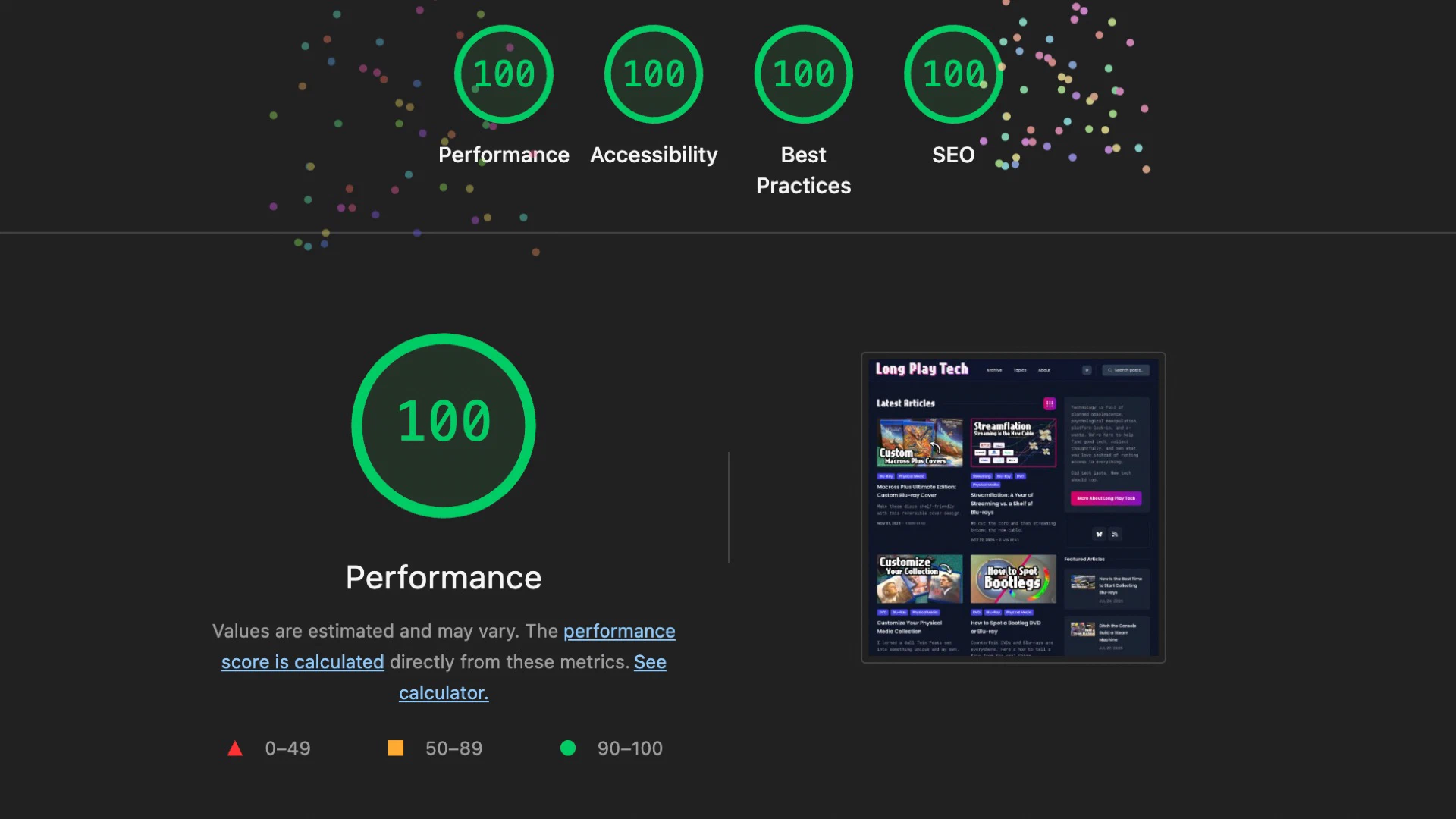
Building an deploying a site is now much simpler. Agentic tools lower the bar to publish a site and the results will be better than those poorly coded WordPress plugins. With simple sites, I find that it creates code that’s easier to maintain, more optimized and more accessible.
Most web publishing problems have been solved and there’s a framework or library for everything. Even web hosting for a blog is cheap and can be automated. Agentic coding tools can do all of this with a few commands. If a blog publishing platform doesn’t have a feature you want, now you can just build it.
No one has to be an expert in these technologies or programming languages in order to publish on the web. They also don’t have to depend on a 3rd party platform to make it happen. They can do it themselves and they can own it completely.
Vibe Code Your Own Blog
Build and publish a blog with Hugo, GitHub, and Claude. No terminal. No code editor. You own it.
We Can Control Our Stuff Again
With gaming we have developers using AI to speed up de-compilations and re-compilations of classic and lost games trapped on dead platforms that enable native PC ports with added quality of life improvements. Agentic coding tools are fixing bugs in emulation projects faster than ever. Just being able to fix old PC games that don’t work on Windows 11 is a huge win. It’s an exciting time to be into classic games.
This is also extending to old technology. These tools are allowing people to revive old e-readers, reuse LCD picture frames, and repurpose old tablets into smart home interfaces. Saving them from the landfill or from becoming e-waste. You don’t have to know how to code in order to strip the spyware out of your TV and create a responsive, lightweight display that isn’t full of notifications and ads that were added after a system update.
These tools are giving us back control over our digital lives.
Yeah, AI Has Problems
There are some drawbacks to using this technology. Generative AI has pretty much stolen the entire internet and people’s creative works to fill a huge data set in order to be as powerful as it is. It’s a legitimate complaint and I understand not wanting to touch creative work made with it.
I think Agentic coding is different. It relies on coding libraries, frameworks, languages, and documentation that is freely available and intended to help developers. It’s a limited use case that doesn’t need to rip off Studio Ghibli art or copy every book in the library, but it has likely violated open source licenses.
These tools use a lot of power and data centers. Some of this energy use has been overblown, a lot of use is unknown, but it’s clear no one wants a data center in their back yard.
The best coding tools are on frontier models and those models are power hungry. Often most coding tasks don’t require that kind of power and can use a more lightweight model. I think specialized local models that will allow agentic coding to run on your local computer will be the next step. For most tasks, no data center will be needed.
Personal Use Doesn’t Matter as Much as You Think
Cory Doctorow says, “You can’t personally recycle your way out of climate change.” I think the same is true with an individual’s use of AI. That use isn’t the problem and doesn’t amount to much.
Big tech’s constant use of AI to track you and monitor you and manipulate you into giving hours and hours of your time and attention to a mind-numbing feed of AI generated slop does add up to something.
Reducing the carbon footprint of AI is going to require structrual and legislative change at a higher level to curb big tech’s need for endless energy. Individual use isn’t going to move the needle.
For an individual, I think it comes down to a choice of when to use that little bit of energy. Spending hours of your time browsing and posting on social media that’s run on platforms that make huge data centers hum is a choice. Using that time to vibe code a static site blog that takes nothing to host, loads in a split second, and is energy efficient would result in something you made.
Wasting your life and attention passively consuming algorithmic slop content is also a choice. Actually building something and publishing it is the better one.
Lower the Bar
Lowering the bar might flood the Web with slop, but it also enables things that wouldn’t have been possible before. Make good stuff and share good stuff. The cream will always rise to the top. An algorithm run by a tech giant won’t show you what’s good. It just shows what keeps your attention. Real people will find the good stuff.
Now we can build our own tools, platforms, games, and products without relying on middle men. We can get away from big tech and their control over the Web. We can reclaim the physical products we own but have no control over. We can save dead devices from the landfill and give them a new purpose. These coding tools give us our autonomy back in this digital world. I’m happy to wade through some slop to have it.

Start the conversation