
To me, vinyl’s comeback has been one of the most interesting cultural shifts of the last decade. People rediscovered what it feels like to own music. The experience of holding an album in your hands, flipping through artwork, and sitting down with a record from start to finish. It brings back intentionality to a world of infinite, soulless, algorithmic playlists.
But here’s the thing nobody wants to admit: CDs do all of that too. For a fraction of the price.
You Own Nothing on Streaming
That $15 a month you’re paying for Spotify or Apple Music doesn’t buy you a single song. It rents you access to a catalog that can change at any time. Albums get pulled over licensing disputes. Remasters replace previous recordings. Artists remove their own work. When servers shut down, your library goes with them.
You’re not building anything. You’re paying for access. Which … is fine, up to a point.
A CD is yours. No terms of service, no licensing changes, no internet connection required. Buy it once, play it forever. You own it.


The Ritual is Real and CDs Have it Too
One of the biggest reasons people give for loving vinyl is the ritual. There’s a great piece on Twlinch that breaks this down: you select an album, carefully remove it from its sleeve, place it on the turntable, and wait for that first crackle. It forces you to slow down and be present. The article calls it a grounding experience, almost meditative, and argues that committing to a full album without skipping encourages “deep listening” that’s more psychologically rewarding than passive background music.
The science backs all of that up, but none of it is unique to vinyl.
Research shows that intentional, focused music listening activates areas of the brain linked to emotion, memory, and reward. Psychology Today reports that even casual intentional listening can lower cortisol levels, boost mood, and enhance cognitive flexibility. Active listening, where you’re paying attention to the music rather than using it as background music, engages multiple neural networks at once, improving memory formation and emotional processing. A scoping review published in PMC found that intentional music listening specifically reduced pain, enhanced mood, and improved well-being through measurable changes in physiological arousal.
The key word in all of that research isn’t analog or vinyl. It’s intentional.
CDs offer the same ritual. You browse your shelf. You pick an album. You open the case, load the disc, and press play. You sit with the liner notes and artwork while the album plays front to back. It’s the same deliberate act of choosing and committing to a listening experience. The same grounding, the same deep listening, the same cognitive benefits apply.
The ritual isn’t about the format. It’s about the intention. CDs give you that.

The Cost Difference
Streaming is about $12–$15 a month. A new vinyl record runs $30–40 these days, sometimes more. A new CD is around $15. Used CDs are around $1–4 at any thrift store, used media shop, or online seller.
Let’s compare:
| Streaming (~$12/mo) | New Vinyl (~$35) | New CDs (~$15) | Used CDs (~$4) | |
|---|---|---|---|---|
| Annual cost | $144 | $144 | $144 | $144 |
| Albums owned | 0 | ~4 | ~9-10 | ~36 |
| After 5 years | 0 albums, $720 spent | ~20 albums owned | ~48 albums owned | ~180 albums owned |
Five years of streaming: $720 spent, zero albums to show for it. Five years of vinyl at the same spend: 20 albums. Five years of new/used CDs: 48–180 albums you own permanently. That math is hard to argue with.
And to be clear, this isn’t an either/or situation. Streaming is great. It’s convenient, it’s everywhere, and it’s a great way to discover new music. But there’s a difference between having everything available and owning the things that matter to you. Streaming is for the everyday. Physical is for the albums you care about, the ones you want to sit with, the ones you’d notice if they disappeared from a catalog tomorrow. The two work better together than either does alone.
The Format That Does Everything

Here’s something neither streaming nor vinyl can match: CDs give you a physical copy and a digital library, with zero restrictions.
Rip your CDs to FLAC, MP3, or whatever format you prefer. CD/DVD USB drives are cheap! Load them onto your phone, your computer, a media server, a portable player. Play them on whatever you want. No DRM. No internet or app required. No subscription either. You’re building a personal digital library that you control completely, backed up by the physical disc sitting on your shelf.
You can even burn mix CDs for friends. That’s a creative ritual streaming quietly killed, and CDs can bring it back.
Vinyl can’t do any of this without specialized equipment and significant quality tradeoffs. CDs hand it to you for free.
Concert Souvenir


One of the best ways to support an artist directly is to buy their CD at a merch table. The margins for artists on physical sales, especially at shows, blow streaming royalties out of the water. A single CD purchase at a concert likely earns an artist more than thousands of streams.
Plus, a concert CD is a souvenir. In an era of digital tickets and QR code entry, you don’t even get a stub anymore. A CD from the merch table is a physical reminder of the night, something you can hold and revisit. And for the price of a single t-shirt, you could walk away with several albums that directly support the artist.
Smaller, Lighter, Greener
CDs take up a fraction of the space and weigh considerably less than vinyl does. A single shelf holds hundreds of CDs where the same space might fit 40–50 records … if that shelf can handle the weight! Live in a small apartment or just don’t want to dedicate an entire wall to your collection, CDs are the practical choice.
They’re lighter on materials too. A CD is about 16 grams of polycarbonate versus 120–180 grams of PVC for a vinyl record, roughly 8–10x less plastic per album. New releases increasingly come in paper “digipaks” and sleeves instead of jewel cases, reducing plastic even further. And if you’re buying used, the environmental cost was already paid years ago. You’re keeping something out of a landfill.
Building a Collection Without Breaking the Bank
The used CD market is enormous and easily affordable. Thrift stores, garage sales, used media shops, pawn shops, and eBay provide a nearly endless supply of music waiting to be claimed for a few dollars per album.
This is what makes CD collecting so satisfying. You can take chances on albums you’ve never heard. Grab an entire artist’s discography for the price of a single new vinyl record. Build a genuinely deep, personal music library without spending a fortune.
The hunt is half the fun, the stakes are low, and it’s a ritual unto itself. Finding an unexpected diamond in the rough and then taking it home for a listen gives dopamine hits even more potent than finding that one good TikTok after swiping past 100 bad ones.
Getting Started
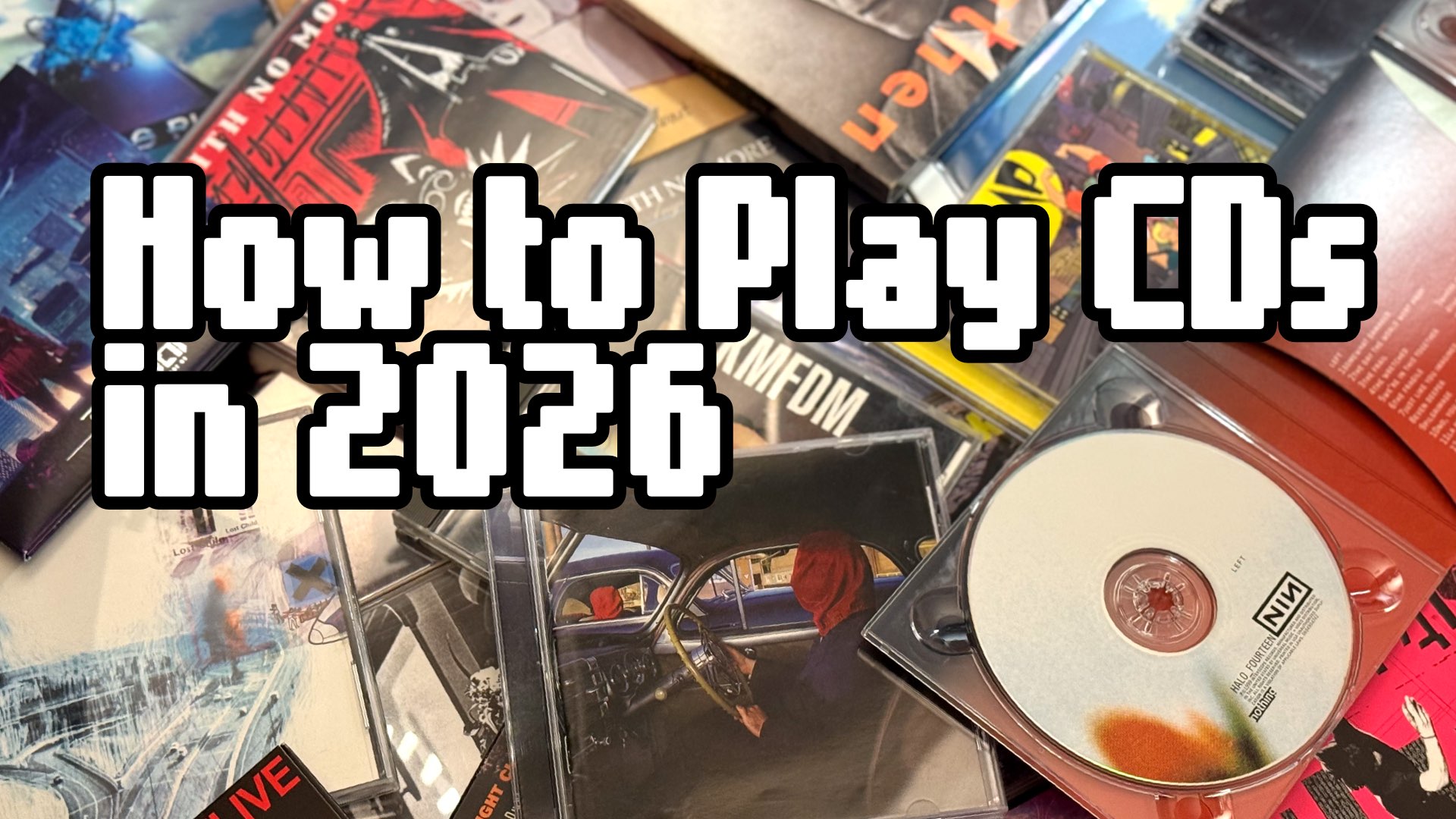
If you’re convinced but not sure how to actually play CDs in a modern setup, I’ve written a guide on that. It covers everything from budget setups to integrating a CD player into your current system.

How to Play CDs in 2026
You might already have everything you need to get started.
The gear doesn’t have to be expensive. The music doesn’t have to be expensive. CDs are the most practical and affordable way to own music in 2026. The vinyl revival proved people want to hold their music again. CDs make that possible for everyone.
Start the conversation